
Agate Private School
Deconstructing Subjects
Learning begins with life. When we cook, build, grow, make music or solve a problem, we draw on many kinds of knowledge at once.
At Agate, we call our approach Deconstructing Subjects: helping learners recognise, connect and use ideas in the activities, questions and relationships that give those ideas meaning.
Knowledge starts in the world
Imagine building a shelter. You measure lengths and angles, choose materials, consider the weather, draw on other people’s experience, and work together to solve problems. Mathematics, science, geography and communication all belong to the same undertaking.
Subject names give us useful ways to describe that knowledge. The connections are already there in the work.
One loaf, many kinds of learning
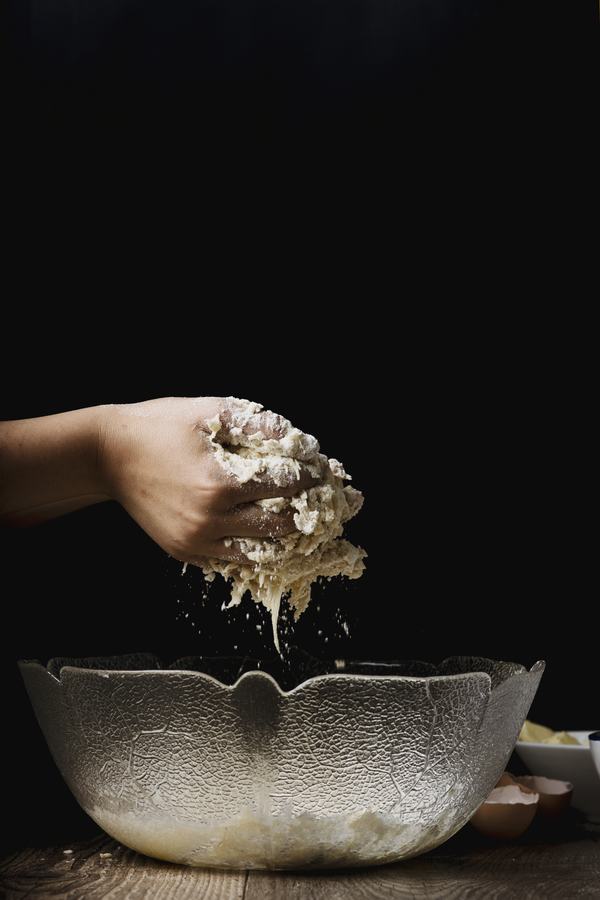
Breadmaking is a good example. A learner might:
- Measure and scale: use fractions, ratios and quantities to adjust a recipe.
- Observe and investigate: explore how yeast, temperature and time affect the dough.
- Read and communicate: follow instructions, record changes and explain the process.
- Explore people and places: ask where ingredients come from and how bread fits into different cultures.
- Plan and evaluate: compare costs, manage time and decide what to try differently.
The finished loaf gives those ideas a shared purpose. Separating every part into a different lesson can make that purpose harder to see.
Notice the learning in everyday activities
The same connections appear in activities your family may already enjoy:
- Cooking: fractions, measurement, temperature, timing and scaling.
- Carpentry: angles, estimation, area, volume and the properties of materials.
- Gardening: seasons, soil, plant growth, measurement and budgeting.
- Sewing: patterns, symmetry, proportion and spatial reasoning.
- Music: rhythm, sequence, frequency and recurring patterns.
- Buying and selling: arithmetic, percentages, comparison, forecasting and risk.
- Finding your way: distance, direction, maps, scale and time.
- Art: perspective, proportion, transformation and composition.
Language lives in conversation, storytelling, negotiation and record keeping. Science grows through observing, questioning and testing. History takes shape through places, objects, memories and the consequences of decisions.
How knowledge becomes a school subject
People have long classified knowledge to discuss, preserve and teach it. Disciplines give specialists shared language, methods and standards. Those are valuable tools.
Schools also use subjects to organise textbooks, teachers, timetables and assessment. A complex activity can be divided into separate topics, sequenced into lessons, and measured through exercises or tests.
One way to picture this is extrusion: pushing something complex through a mould until it takes a standard shape. The risk is that a lesson’s format can begin to stand in for the knowledge itself. Measurement becomes a worksheet; plant life becomes a set of vocabulary words.
Keep the connections visible
A learner may calculate percentages accurately on paper and still need help recognising the same relationship in a sale price, a recipe or a crop yield. Understanding includes knowing when an idea is useful and how to apply it.
We want learners to be able to:
- See why an idea matters and where people use it.
- Recognise knowledge they have gained through experience.
- Combine ideas when a question crosses subject boundaries.
- Use what they know in unfamiliar situations.
- Develop judgement by trying things and considering the results.
How we approach learning at Agate
We begin with the learner’s strengths, interests, questions and goals. The starting point might be a project, a place, a responsibility, a relationship or something they want to become capable of doing.
From there, we help them find and combine the knowledge their undertaking needs. Subjects remain available as resources, and there is room for a question to lead into several areas of learning.
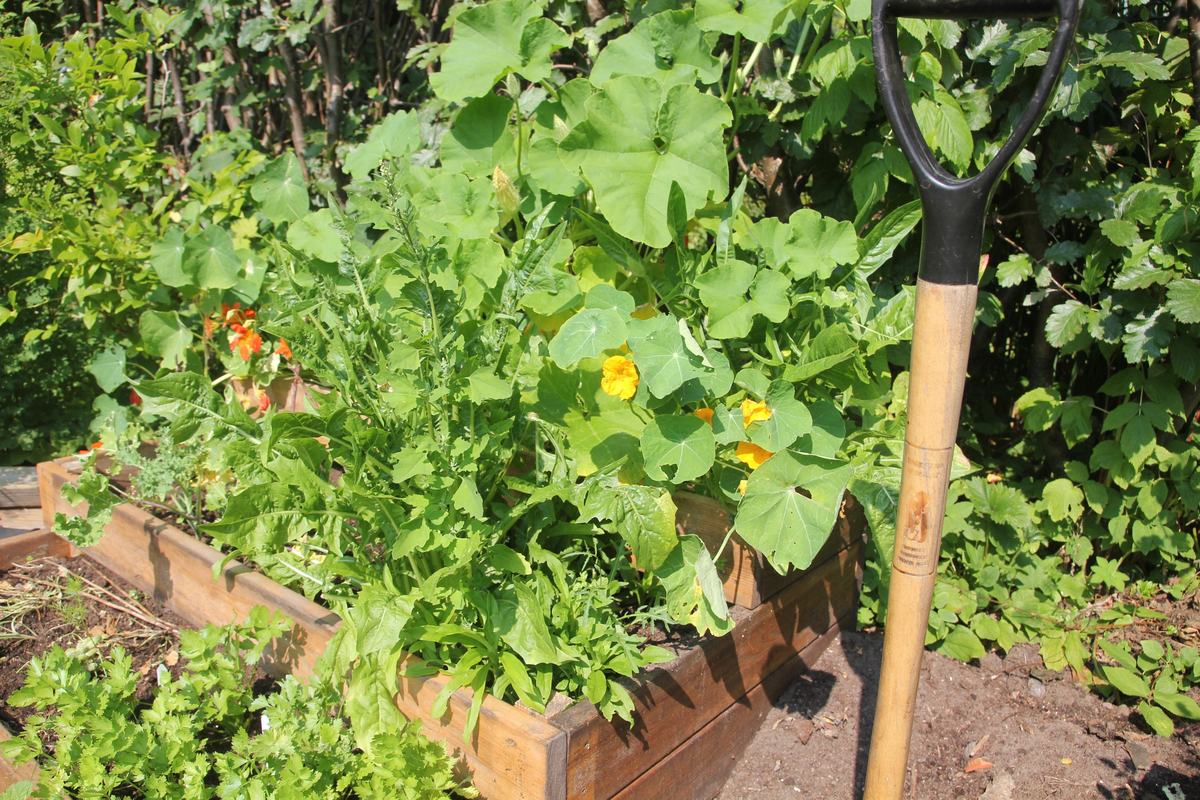
A garden might lead a learner to investigate soil chemistry, weather, plant biology, measurement, design, local history or the cost of growing food. It also asks for patience, care and decisions about shared resources.
We help learners notice these connections while keeping the project meaningful to them.
Six ways we support the process
- Start with something that matters. What does the learner want to understand, make, change or accomplish? Who uses this knowledge, and for what purpose?
- Trace ideas to their everyday uses. Fractions connect to sharing, building, music and cooking. Geometry connects to structures and design. Writing connects to memory, communication and story.
- Make existing learning visible. Help the learner recognise the reasoning, language, science, creativity and judgement already present in their pursuits.
- Introduce useful tools. Offer vocabulary, symbols, formulae and methods when they help the learner take the next step. Experience gives these tools meaning; the tools then extend what the learner can do.
- Follow the connections. Allow a question to deepen, branch out, pause or circle back. Learning can move across the boundaries of a conventional timetable.
- Look for understanding in use. Notice what the learner can explain, investigate, make, repair, design, compare, teach, adapt or decide.
Putting knowledge back to work
For us, Deconstructing Subjects is a process of restoration: returning ideas to the human curiosity, needs and purposes that make them useful.
Cooking is a place where mathematical thinking develops. Carpentry brings geometry into contact with materials and judgement. Gardening brings living systems, practical decisions and care for a place together.
We support learners in recognising those relationships and building on them, with resources and guidance that suit their own path.
Wondering what this could look like for your family? Talk with us about your learner’s interests and goals.
Photo credits
Illustrative photographs: Making Bread by Gaelle Marcel, CC0 1.0; Raised vegetable bed 1 by Kerstin Namuth, CC BY-SA 4.0. Images are displayed at responsive sizes; the bread photograph is cropped within its frame.

